
How young adults are redefining nights out, relationships and priorities.
Based on a nationally representative UK survey of 2,000 adults conducted by OnePoll (Nov 2025), weighted to ONS population estimates.
OriGym’s new research reveals a generational turning point in UK lifestyle culture.
Through a UK-wide survey of 2,000 adults, respondents were asked to look back on their early adult years and share how they spent their nights out, how important fitness felt and where they expected their social lives to take shape.
Older respondents were asked to reflect on what they did between the ages of 18 and 29, while today’s young adults shared how they behave now.
When the data is broken down by decade and generation, one pattern stands out clearly:
Today’s 18–29-year-olds are more home-focused, health-conscious and intentional than any generation before them.
Drinking and clubbing no longer dominate young adult life, as sleep, wellbeing and fitness-based socialising take centre stage.
Young People Are Going Out Less Than Ever Before
When asked how often they went on nights out at age 18–29, older generations reported far more frequent nightlife habits than today’s young adults.
While 37% of the age 30-70+ respondents said they went out several times a week in their 20s, the data shows this pattern decreases consistently for each generation from Boomers onwards.
Older generations were far less likely to treat “a night in” as part of a health routine when they were the same age.
In comparison, Gen Z are far more likely to stay in for the sake of their wellbeing. Just 18% go out several times a week, while most say they prefer evenings spent resting, exercising, cooking or simply recovering.
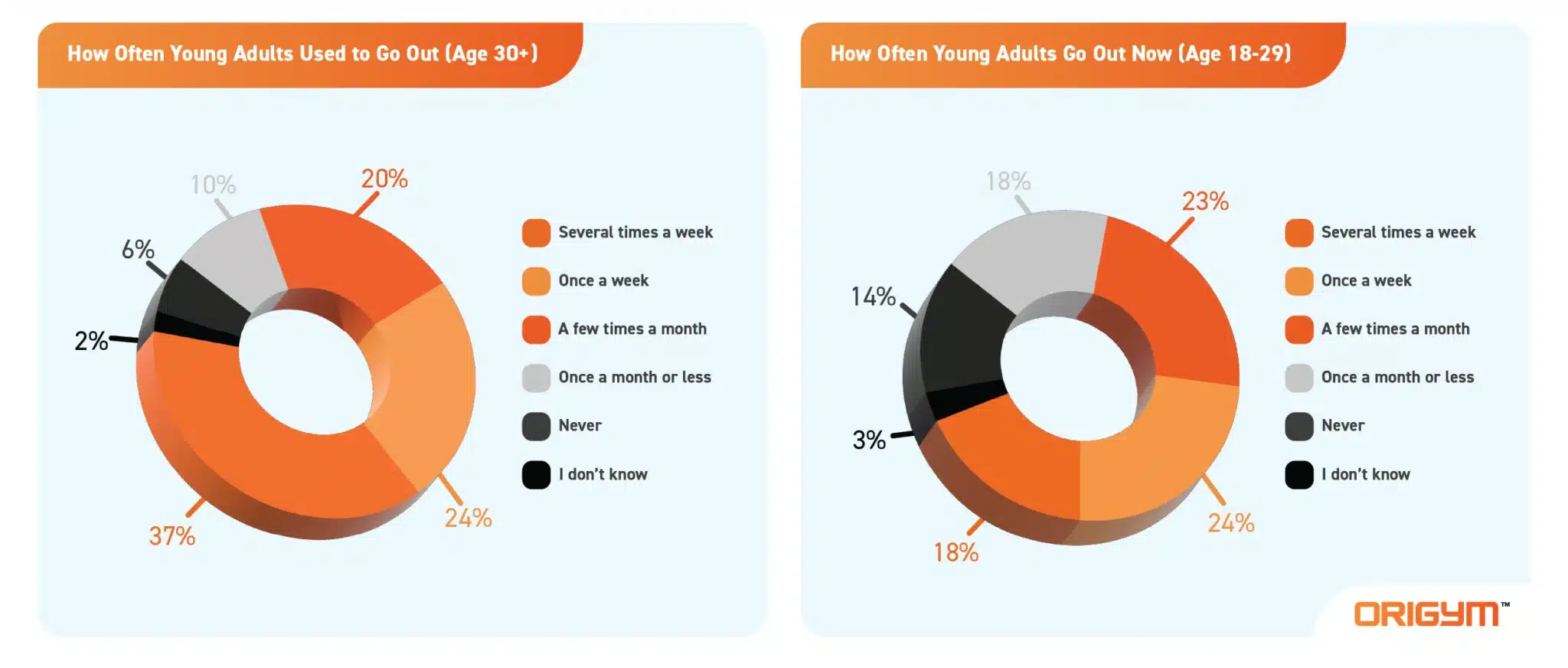
For today’s young adults, staying in is no longer a fallback option. It’s an intentional lifestyle choice.
Even Gen Z Dating Culture Is Moving Beyond Bars & Clubs
The shift away from nightlife is not just changing how young adults socialise. It is also reshaping where they expect to meet potential partners.
When looking at responses from older generations reflecting on where they preferred to meet someone at ages 18 to 29, bars and clubs still ranked highest overall:
- 36% chose bars or nightclubs
- 4% chose gyms or fitness groups
However, when focusing specifically on Gen Z respondents, the pattern shifts noticeably.

Among today’s 18 to 29-year-olds:
- 13% chose bars or nightclubs
- 15% chose gyms or fitness groups
This marks a clear departure from the preferences of previous generations at the same age.
Social and romantic connections are increasingly built around shared routines, interests and lifestyles rather than shared drinking habits.
For Gen Z, compatibility is just as likely to start during a workout as it is over a drink.
Gen Z Are the Most Health-Focused in Modern History
When older generations were asked to look back on how they viewed health and fitness at 18 to 29, a striking generational divide emerged.
Across those aged 30 to 70+, the pattern was consistent:
- 15% said fitness was a key part of their identity
- 17% wished they had done more but struggled with motivation or time
- 34% said they were not interested in health or fitness at all
In other words, for most adults now in their 30s, 40s, 50s, 60s and 70s, wellness simply was not a defining part of young adulthood.
Gen Z tell a completely different story. Among today’s 18 to 29 year olds:
- 27% described fitness as a key part of their identity
- 35% said they made an active effort to stay fit
- Only 5% said they were not interested at all
This is a dramatic shift. Fitness is no longer an optional extra for young adults. It shapes routines, influences decisions, and often determines whether a night out feels worth it.
While previous generations associated their late teens and twenties with socialising, spontaneity and nights out, Gen Z associate the same life stage with balance, wellbeing and long-term health.
Their lifestyle is not built around nightlife. It is built around feeling good, performing well and staying consistent.

This shift is not subtle. It represents a clear cultural pivot, led by the most health-focused generation on record.
Fitness Now Competes Directly With Nightlife Culture
For today’s young adults, the pull of fitness now rivals the appeal of nightlife.
Only 17% of Gen Z say drinking and nightlife appeal to them most, while 43% are more drawn to health and fitness. Many others see the two as equally important, showing how strongly wellness influences their choices.
For this generation, wellbeing is not something that fits around social plans. It often shapes them. Fitness routines, healthy habits and a desire to feel good the next day hold just as much weight as nights out, and in many cases, they matter more.

New Year’s Eve Has Changed Drastically
When older respondents were asked what they preferred to do on New Year’s Eve at age 18–29, the generational divide became even clearer.
Historically, New Year’s Eve was firmly rooted in nightlife culture.
- 38% went to bars or nightclubs
- 33% stayed in but partied with friends or family
Today’s 18 to 29-year-olds tell a very different story. Just 18% say they plan to go out to a bar or nightclub, while staying in or opting for a quiet night has become the most common choice.

This shift mirrors the wider lifestyle changes explored in OriGym’s Gen Z NYE trends report, which found that fitness goals, wellbeing and next-day routines increasingly shape how young adults approach major social moments like New Year’s Eve.
What was once a night defined by excess has become a moment of intention.
Why Gen Z Choose to Stay In
When Gen Z respondents explained what motivated them to stay in instead of going out, the reasons were practical rather than antisocial.
This isn’t about avoiding people or opting out of social life, but about making choices that better support daily routines, finances and wellbeing. The most common reasons are:

These responses paint a picture of a generation that values balance over excess. Evenings at home are often used to reset, recover and prepare, rather than being seen as a missed opportunity to go out.
Among current young adults, health and wellbeing rank far higher than they did historically. Staying in has become a conscious lifestyle choice, shaped by long-term goals rather than short-term social pressure.
Staying In Doesn’t Mean Being Boring Anymore
Choosing to stay in rarely means doing nothing, particularly among Gen Z.
The data shows that evenings at home are often active, intentional and surprisingly productive rather than dull or uneventful.

Instead of viewing nights in as a lesser option, many young adults use them to recharge and reset. Time at home has become a chance to rest properly, build skills, move their bodies and prepare for what comes next.
For Gen Z, staying in supports recovery, productivity and long-term wellbeing, proving that a quiet evening does not have to mean a boring one.
Nights Out Now Come With Guilt for Gen Z
For many young adults, nights out no longer end with just a hangover. They often come with a sense of guilt too, particularly when late nights, alcohol or disrupted sleep interfere with fitness routines and health goals.
Gen Z were significantly more likely to report feeling guilty after a night out if it disrupted their fitness or health goals.
- 55% felt guilty overall
- 39% felt fairly guilty
- 16% felt very guilty
This reaction was far less common among older generations at the same age, highlighting just how embedded health and wellness routines have become for today’s young adults.
Where nights out were once treated as harmless indulgences, they are now weighed up against progress, recovery and consistency.

For Gen Z, protecting wellbeing does not stop at the gym doors. It shapes how social choices are made, and how they are felt the next day too.
What This Means for the Fitness Industry
Together, the data points to a simple conclusion:
Gen Z are the most health- and home-focused generation the UK has seen.
Fitness is no longer a side hobby or short-term goal. For many young adults, it shapes:
- Their evenings
- Their social lives
- Their celebrations
- Their mental well-being
- Their future career choices
Crucially, this shift goes beyond lifestyle choices. For a growing number of young adults, fitness is feeding into long-term ambitions and career decisions, not just personal goals.
As wellness continues to move from the margins to the mainstream, interest in fitness education, personal training and health-focused careers is rising. The industry is no longer responding to trends. It is growing alongside a generation that has made health part of who they are.
Want to Be Part of the Shift?
For those inspired by the shift, the next step is turning interest into impact. As fitness and wellbeing take centre stage in young adult life, more people are beginning to see health as something worth building a future around, not just a routine to follow.
Professional education plays a key role in shaping long-term careers in the industry. OriGym offers internationally-recognised fitness courses designed to launch successful careers in the industry.
To explore what is available, you can download the full course prospectus or speak directly with the team about finding the right qualification for your goals.